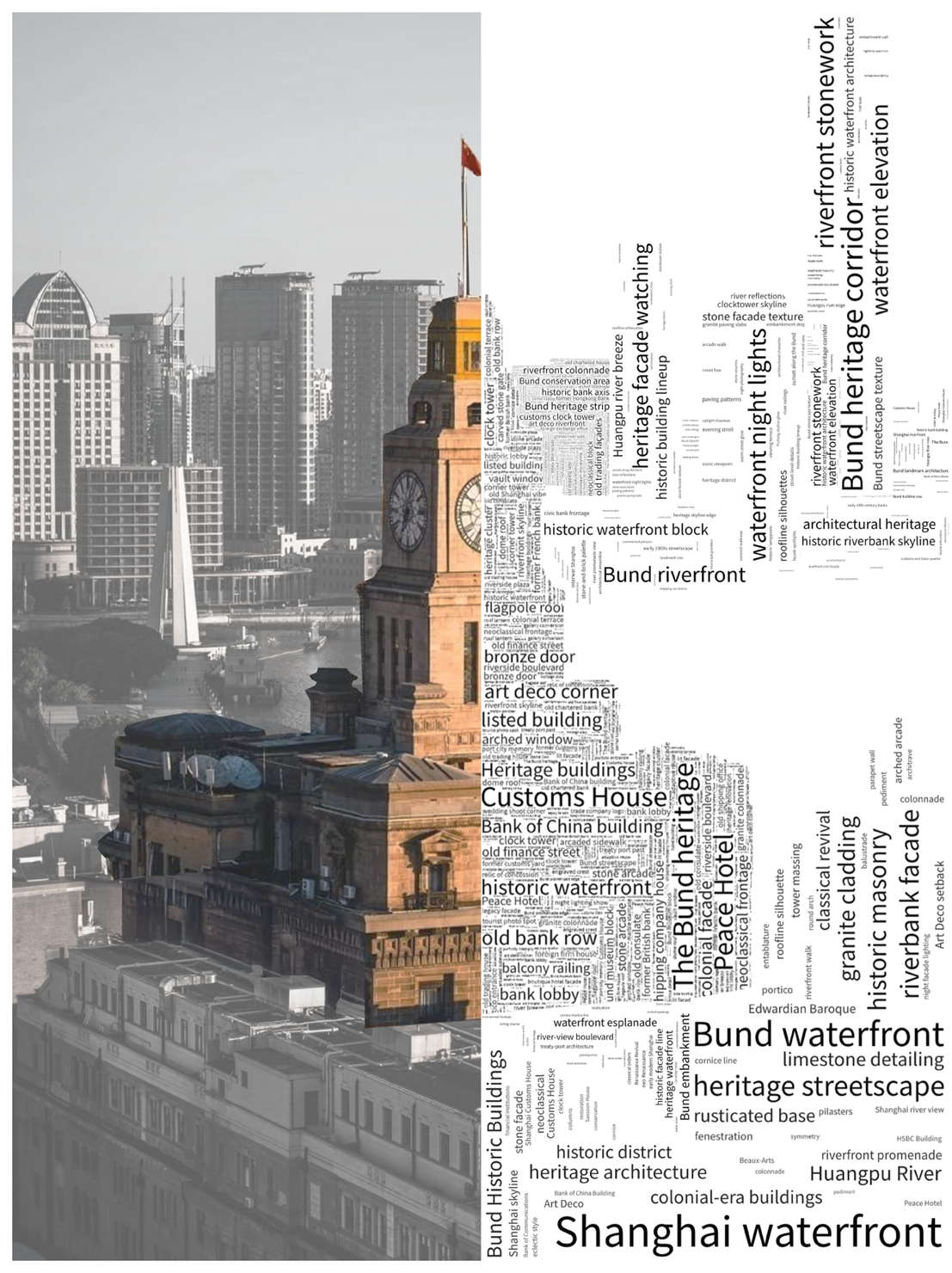
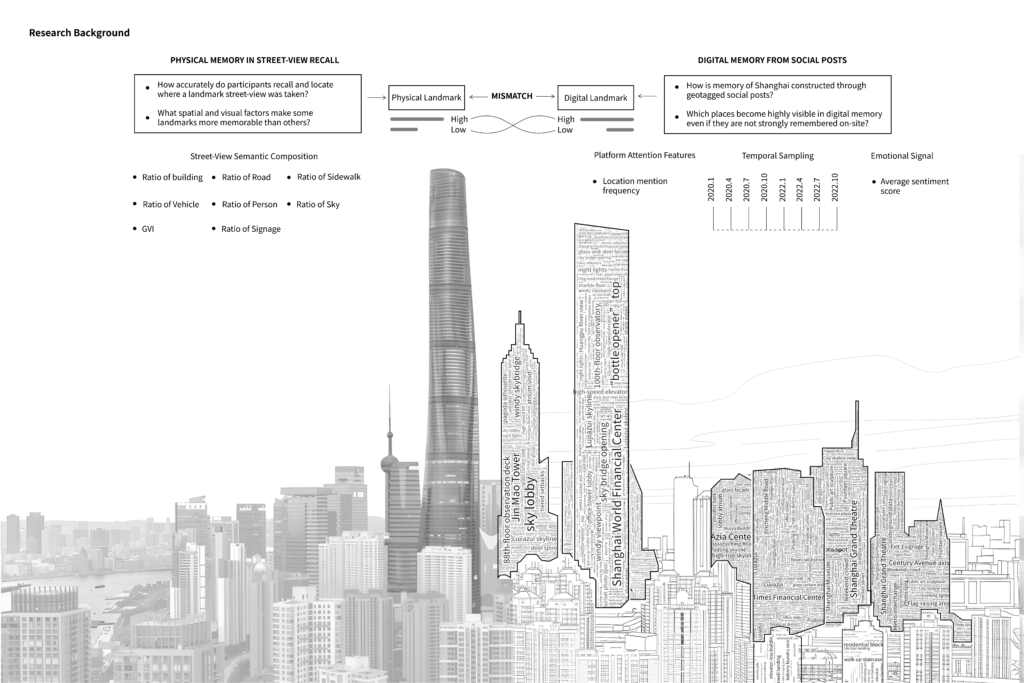
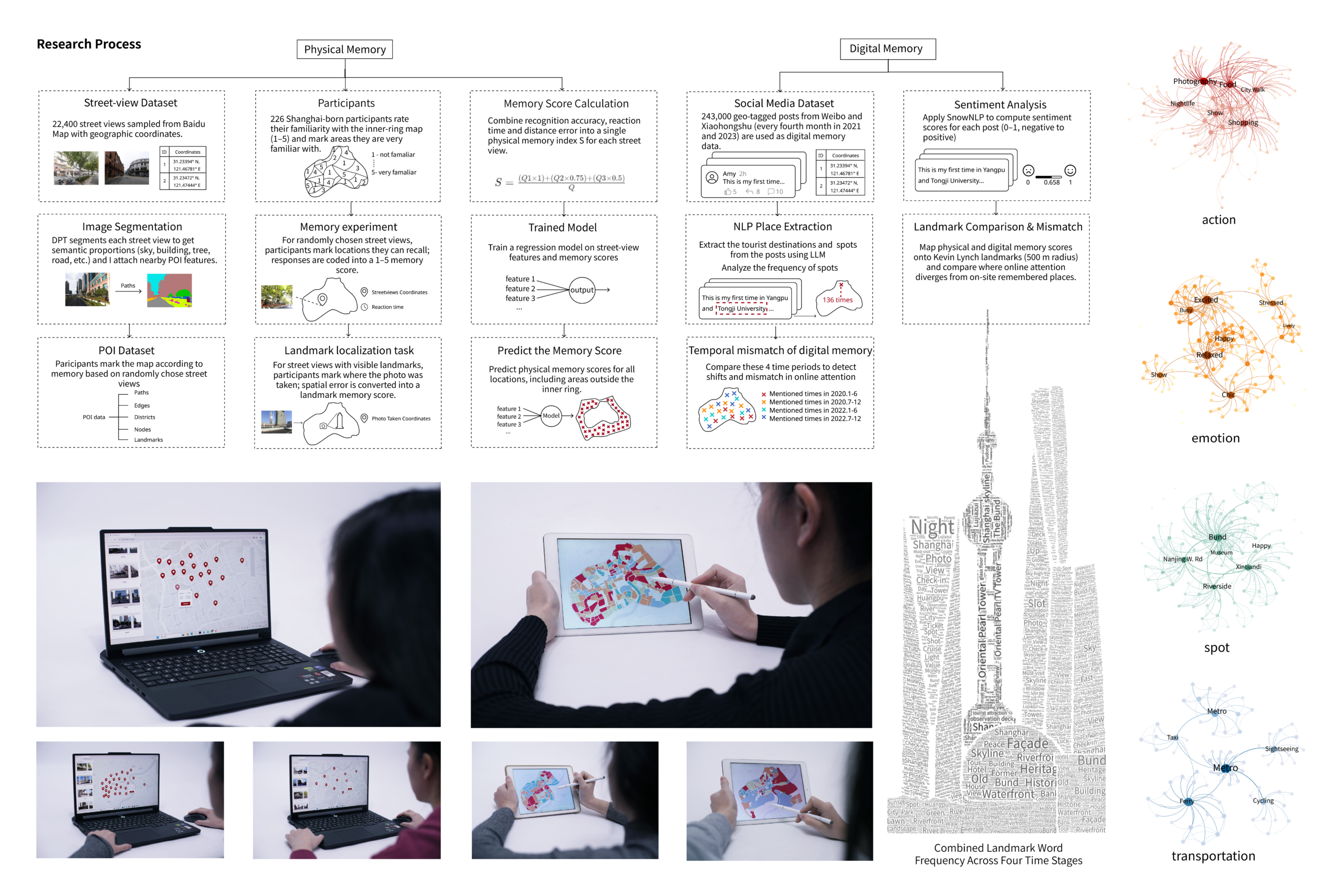
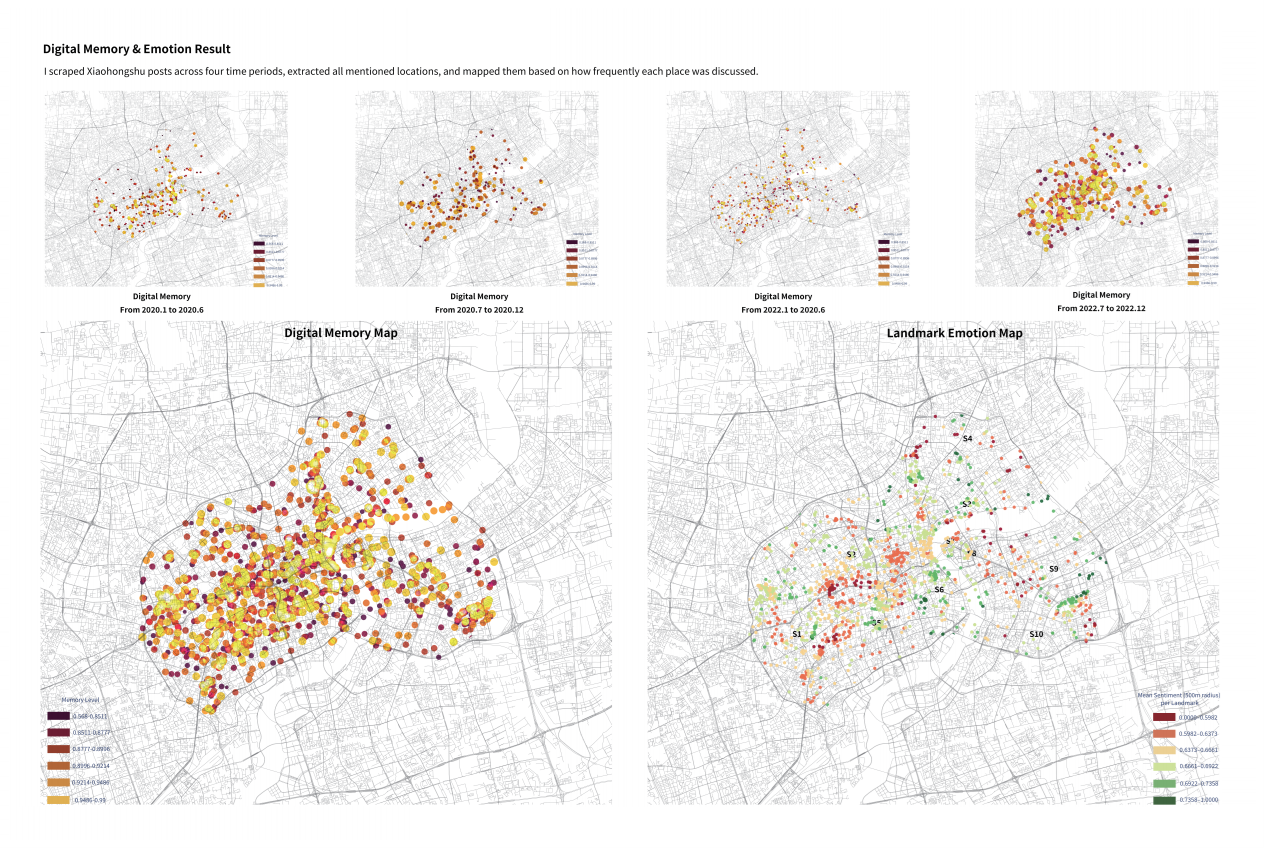
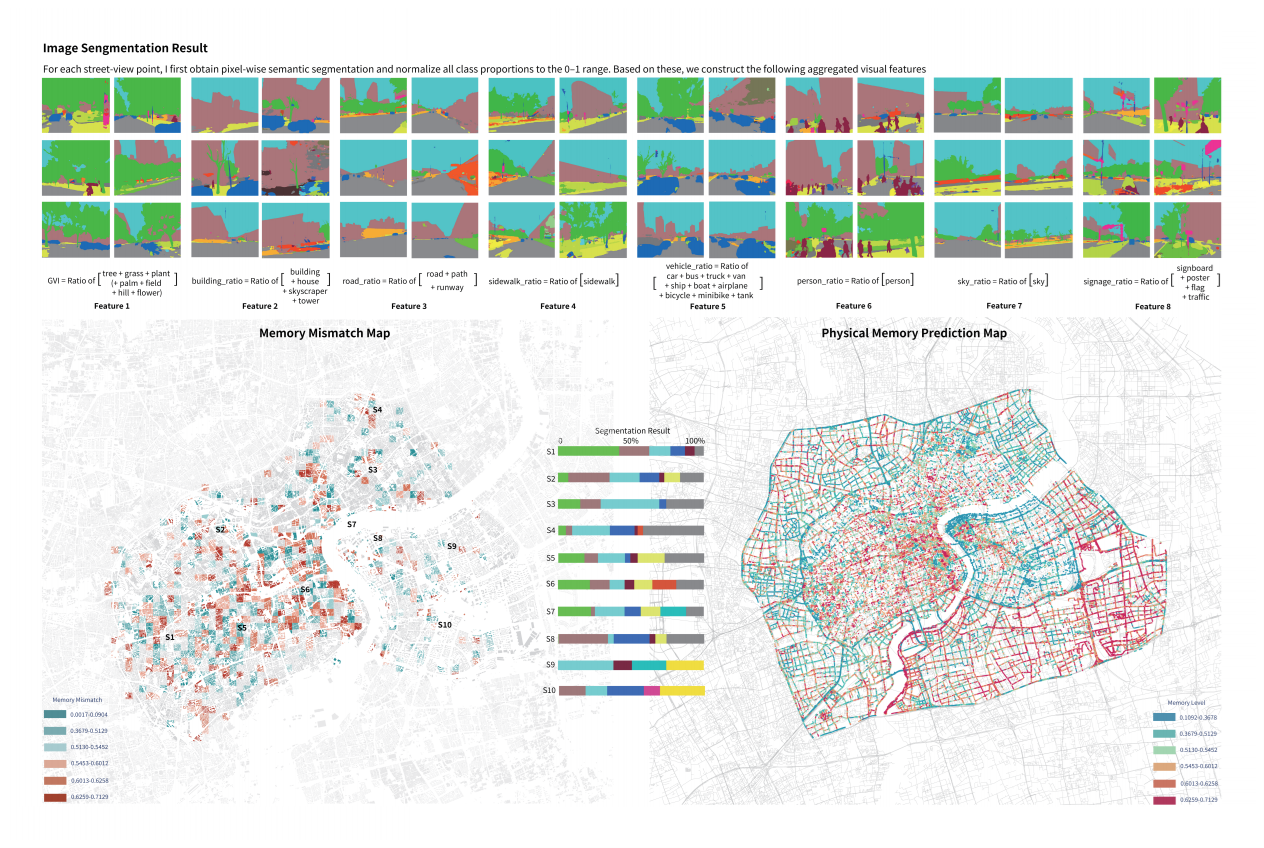
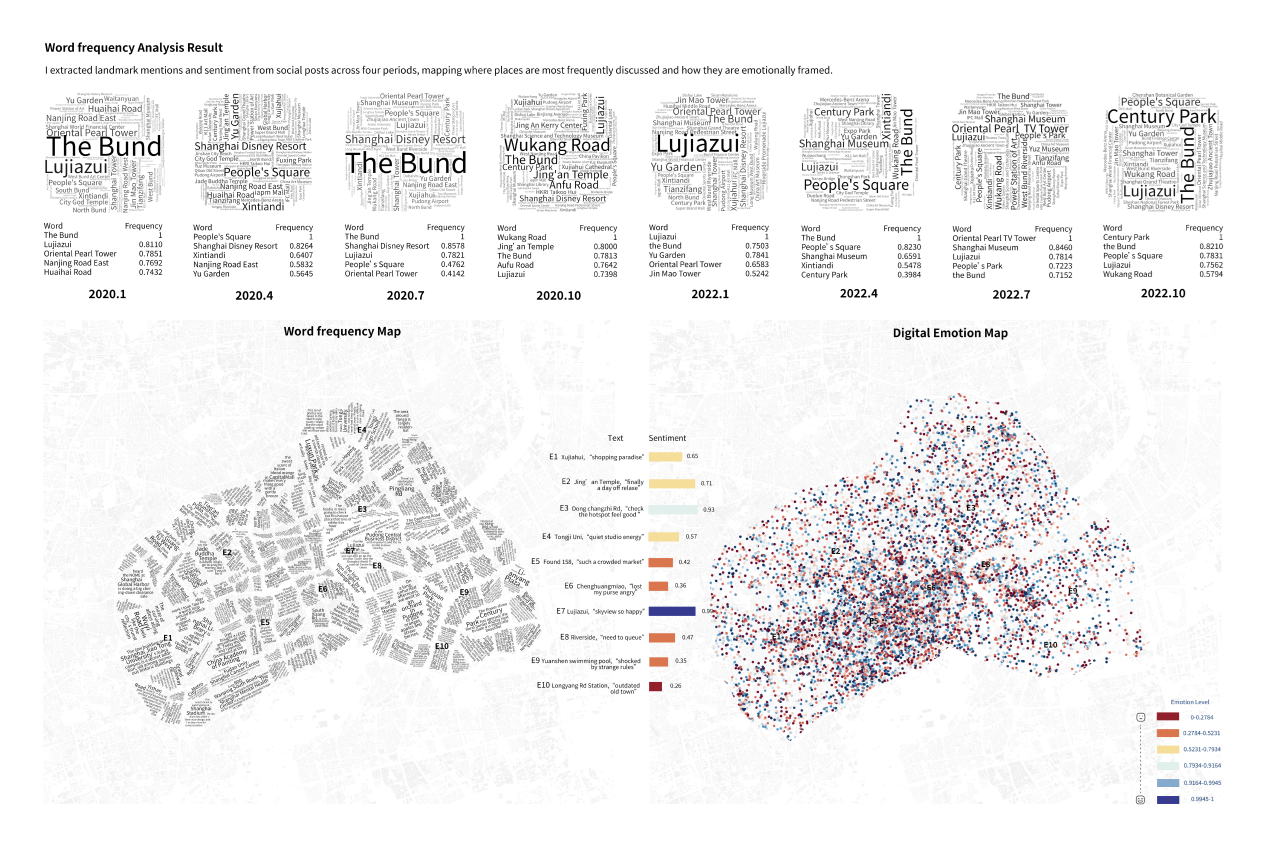
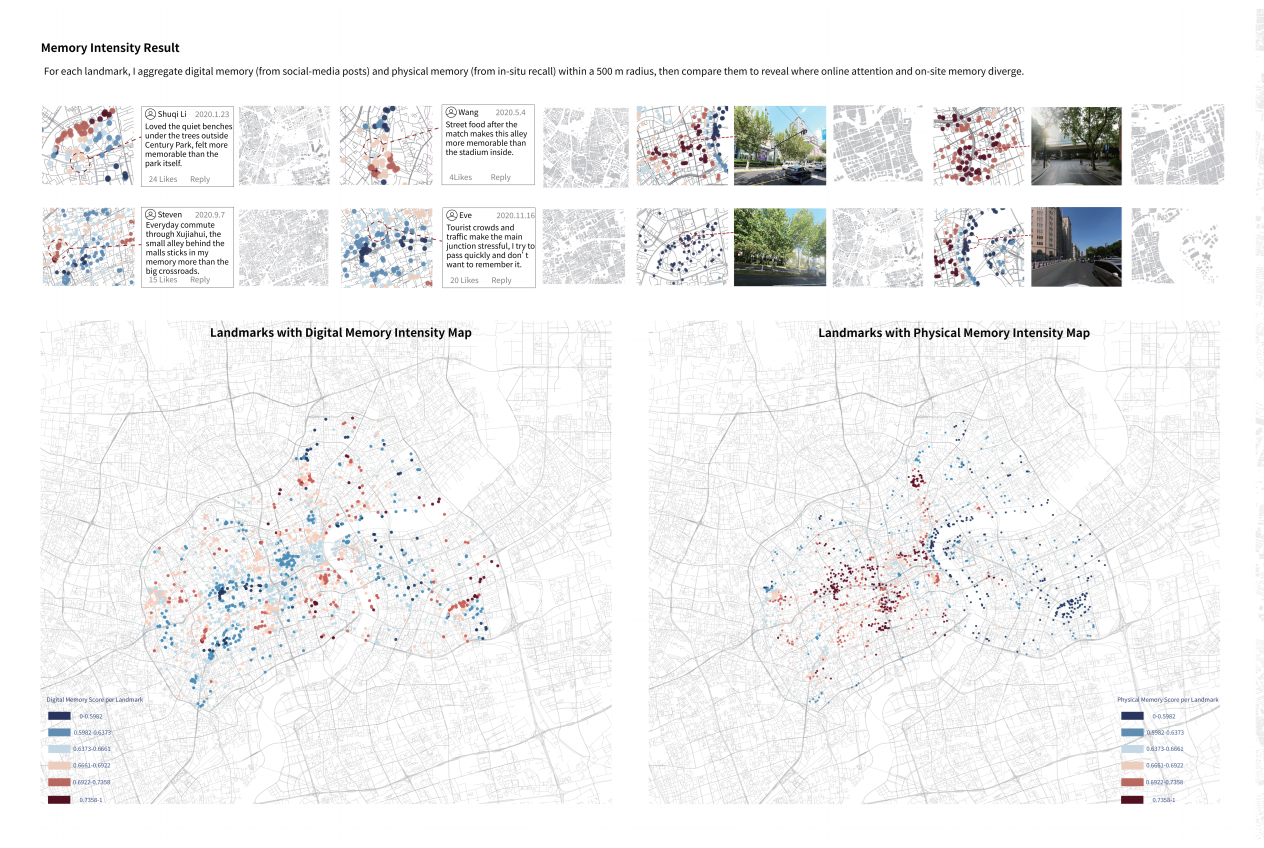
This project investigates how people remember the city differently in physical space and in digital media. First, a large-scale street-view experiment is used to measure physical memory: participants locate images on a map, generating a continuous memory score for each street segment. In parallel, digital memory is extracted from social-media posts, where natural-language processing and POI classification identify places that are frequently mentioned as landmarks. By mapping both layers onto Kevin Lynch’s landmark framework and aggregating them within 500–1000 m neighborhoods, the project reveals where strong everyday landmarks coincide with online hotspots and where they diverge. Areas with high digital but low physical memory expose “internet landmarks” that exist mainly on screens, while the opposite pattern highlights locally familiar yet globally invisible places. Through grids, density maps and mismatch diagrams, Overlaid Memories rethinks how urban design should respond to both lived cognition and platform-driven visibility in contemporary Shanghai.
yiweiwangpf_compressed11_34-scaled.png)
yiweiwangpf_compressed11_35-scaled.png)
yiweiwangpf_compressed11_40-1-scaled.png)