VR Escape Experience Informed by EEG, Heart Rate, and Emotion
Location Shanghai, China
Instructor Han Tu
Contribution 100% Experiment Design+ 100% Model Making + 60% User Experiment
Teammate Yaluo Wang, Canwen Wang
Date Aug, 2023
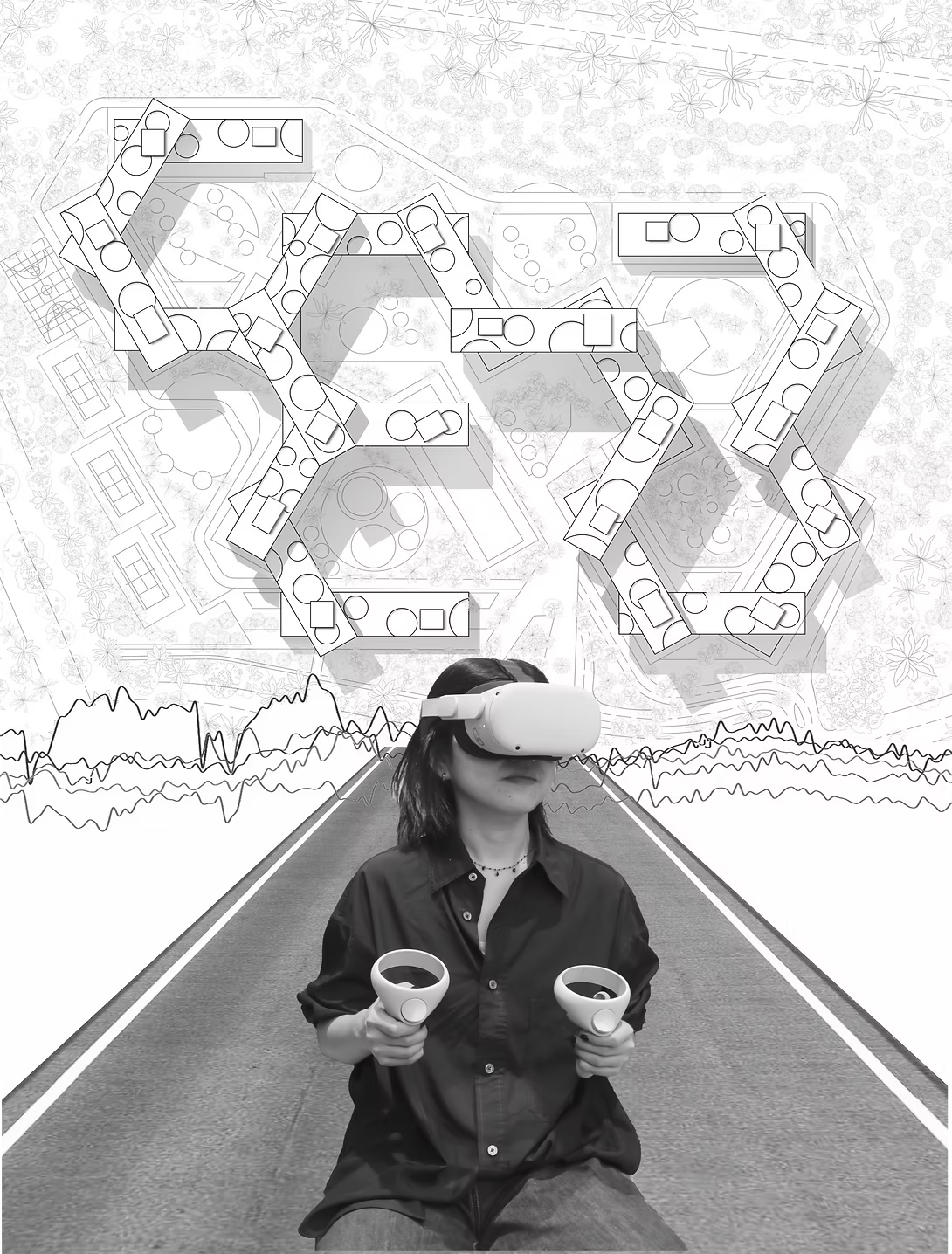
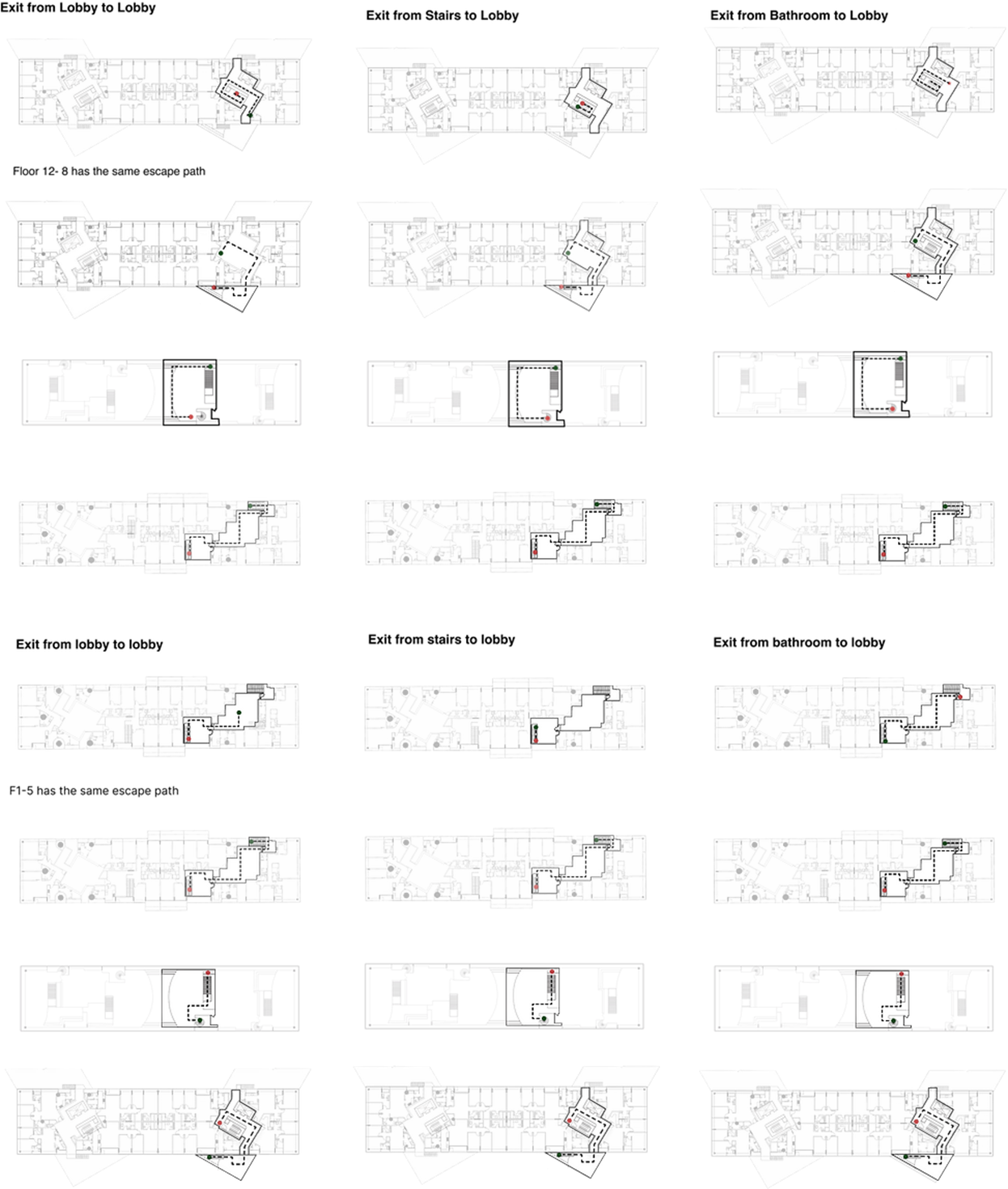
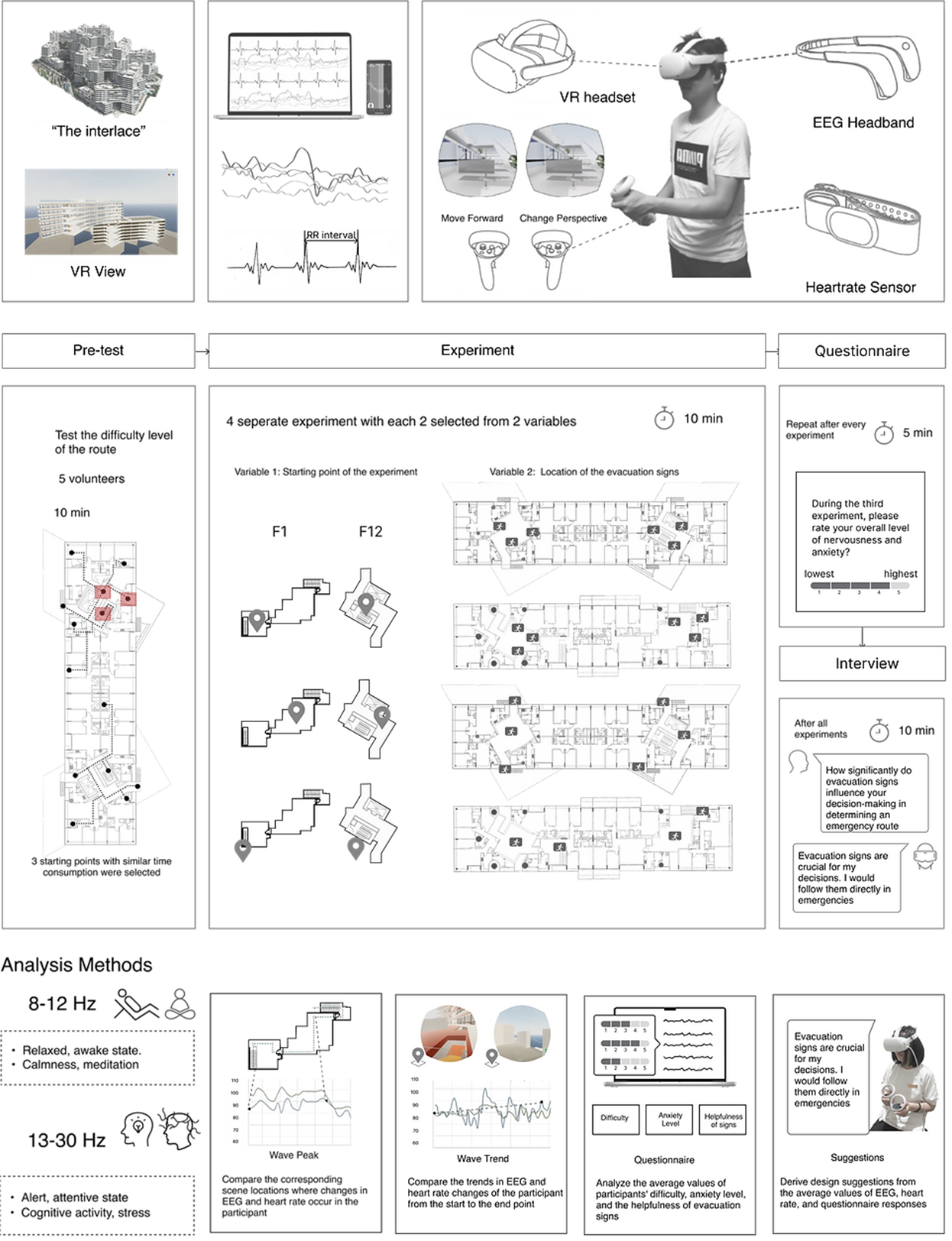
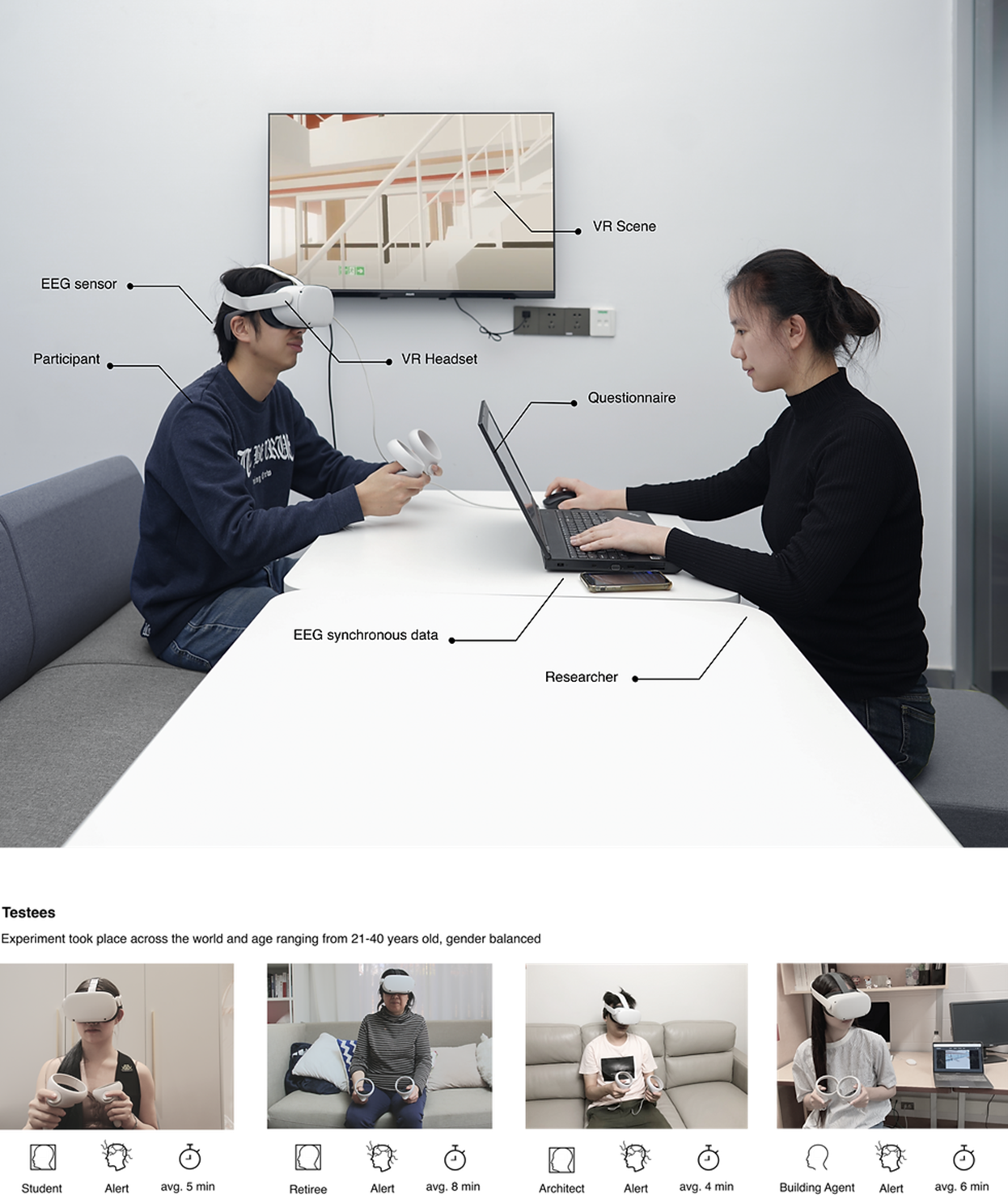
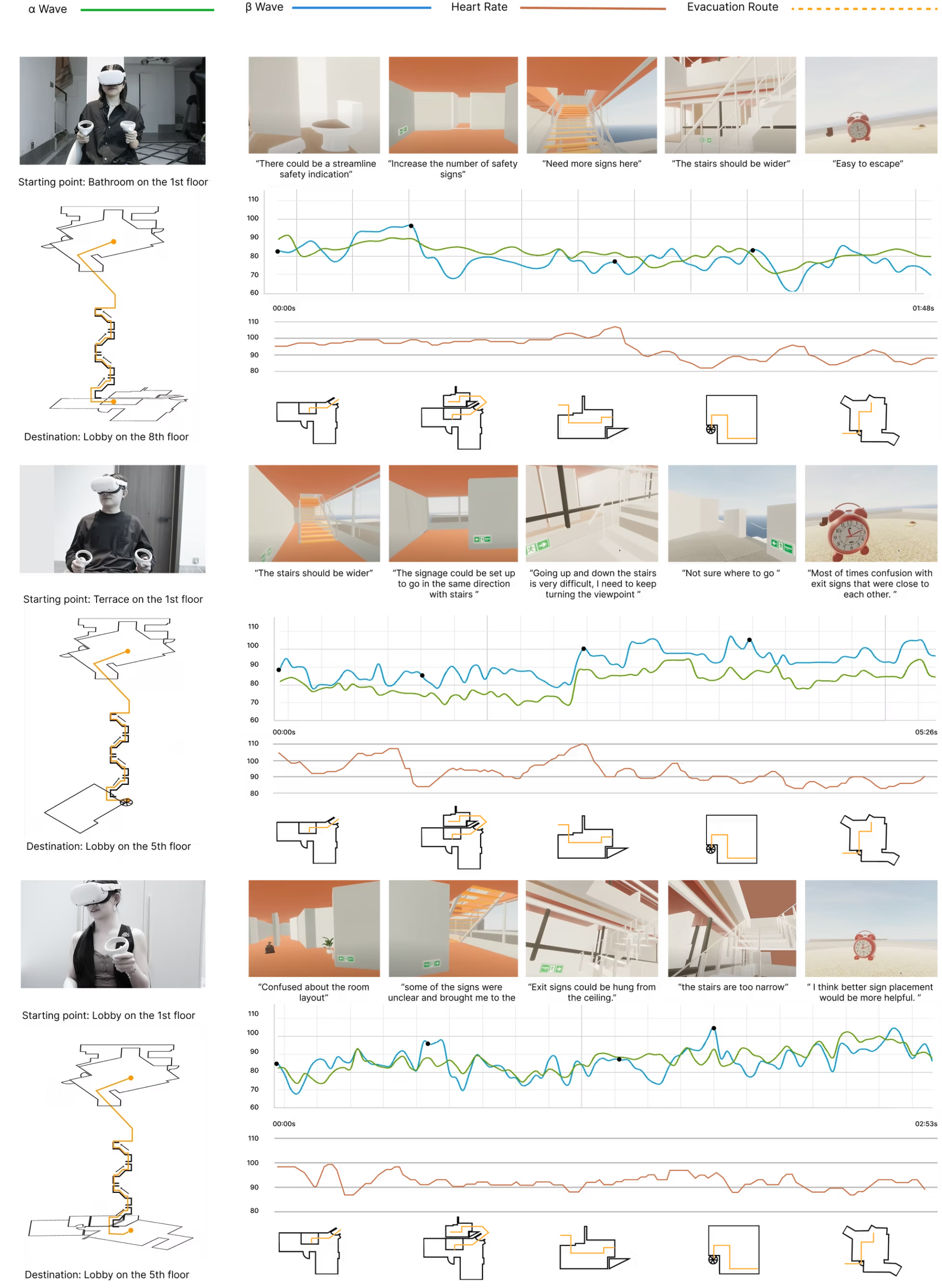
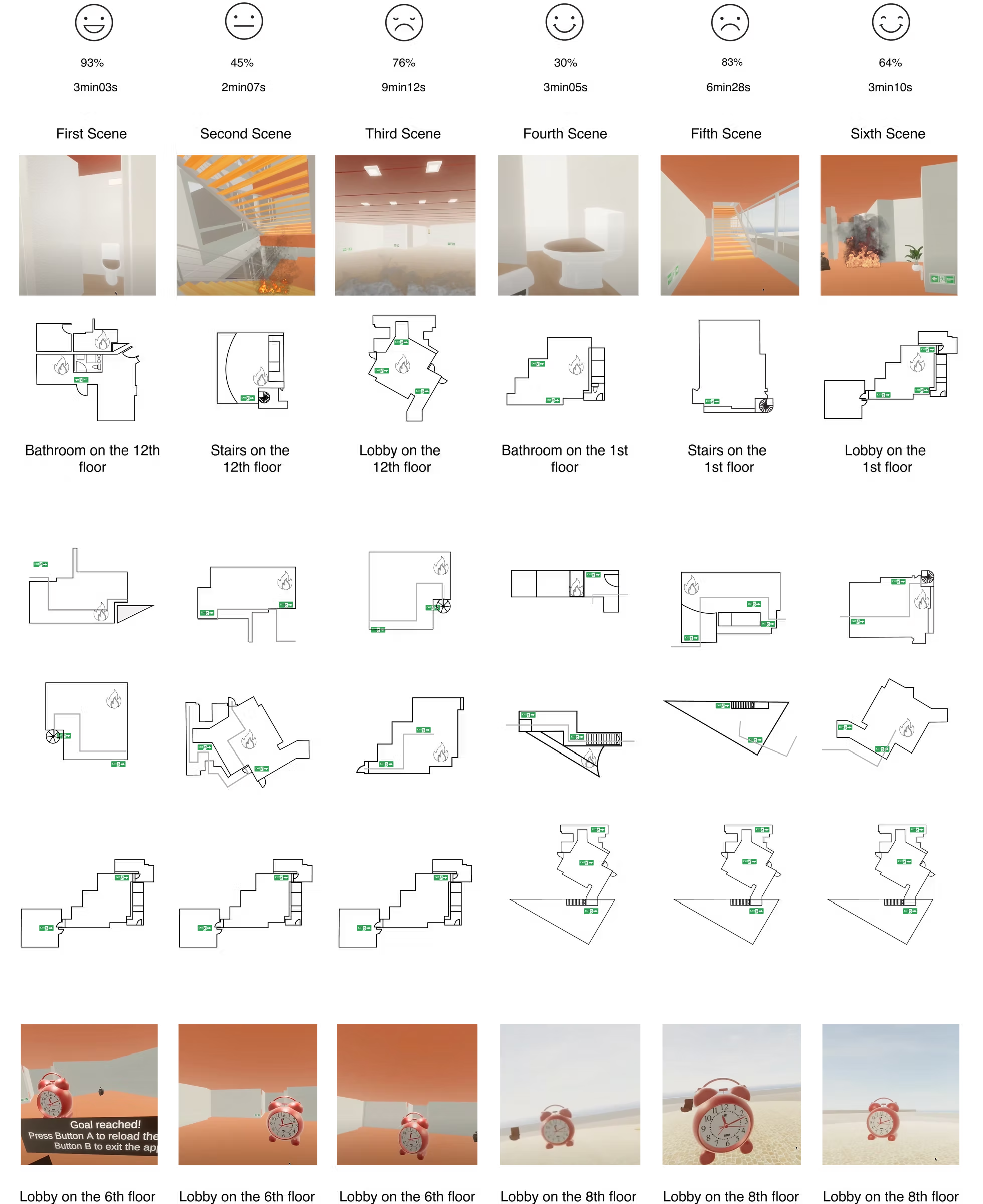
Emergency evacuation is a critical aspect of disaster management, especially within complex architectural structures. Research indicates that individuals’ emotional states significantly impact theirdecision-making and evacuation efficiency during emergencies. To examine the impact of safetysignage and the location of escape starting points on evacuees’ emotions and decision-making, this study utilized two blocks of The Interlace as case studies to create a virtual reality (VR) escapescenario.Participants underwent escape trials in a VR environment, during which electroencephalo-gram (EEG) and heart rate data were collected. Additionally, a questionnaire was administered togather information on their emotions and escape decision-making. The findings offer valuable guid-ance for the design of safety signage.